History of Thringstone
By Nita Pearson
Thringstone probably began as a community of farming families and is listed in the Domesday Survey of 1086 (in Derbyshire rather than Leicesteshire) as Trangesbi.
Romans visited the area with the nearest roman site being on the road from Talbot Lane to New Swannington at Redhall Farm.
The Normans also came to the area, and built castles, the nearest being at neighbouring Whitwick.
Thringstone is mentioned in 1274 as Threngesthorpe and there are records stating that during the reign of Henry 3rd there was a manor at Thringstone and a mill. We now feel that there were several mills in the area. In May 1462, King Edward IV granted lands at Thringstone to Richard Hastings and in 1464, John Beaumont is listed as owning the manor. This then passed to the Earl of Huntington.
By 1801, the population of the village had increased to 901, made up of 203 families, 438 males and 462 females. Most were employed in trade and manufacture although some still worked in agriculture.
By 1851, the population had grown to 1298, probably because of the increase in mining and the appearance of the town of Coalville.
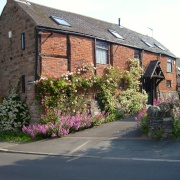
Our village continues to attract people from all walks of life and its history and rural charm, combined with its nearness to motorway links make it an attractive place in which to live.
Friends of Thringstone, a voluntary group engaged in protecting and promoting the village and its history, have produced several publications including walks brochures and the transcriptions of the memories of older village residents, with the original tapes being lodged with the East Midlands Oral History Archive at Leicester University.
See www.friends-of-thringstone.org.uk for further details.