Please login or click here to join.
Forgot Password? Click Here to reset pasword
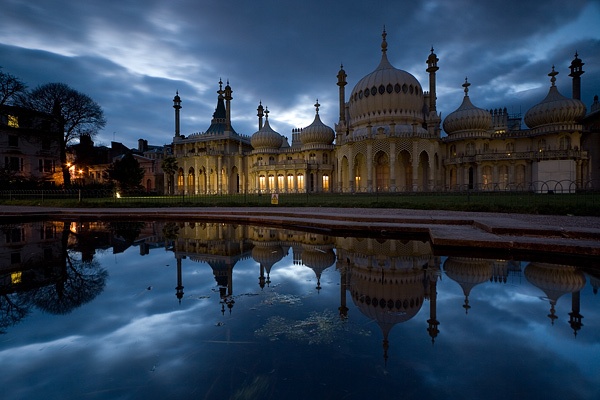
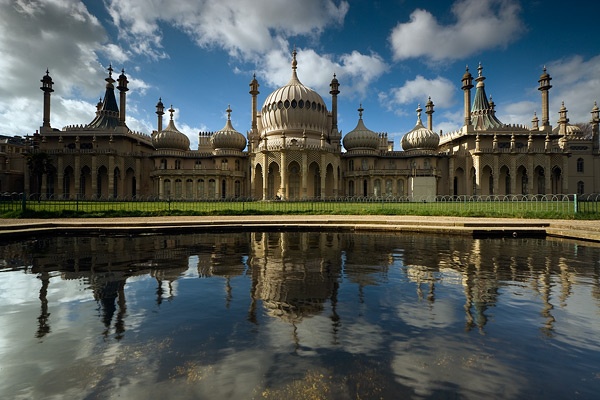
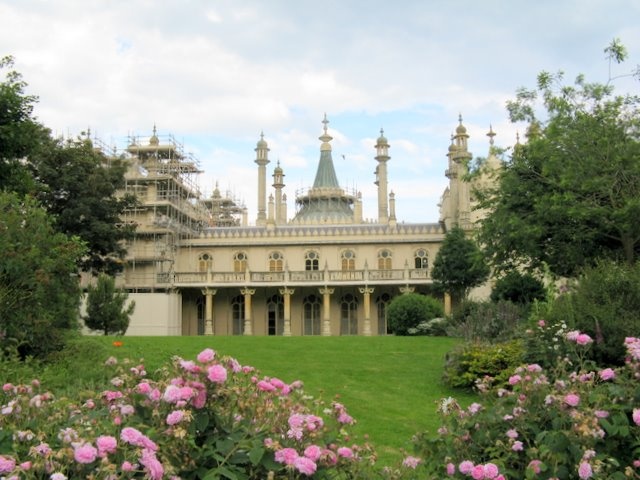
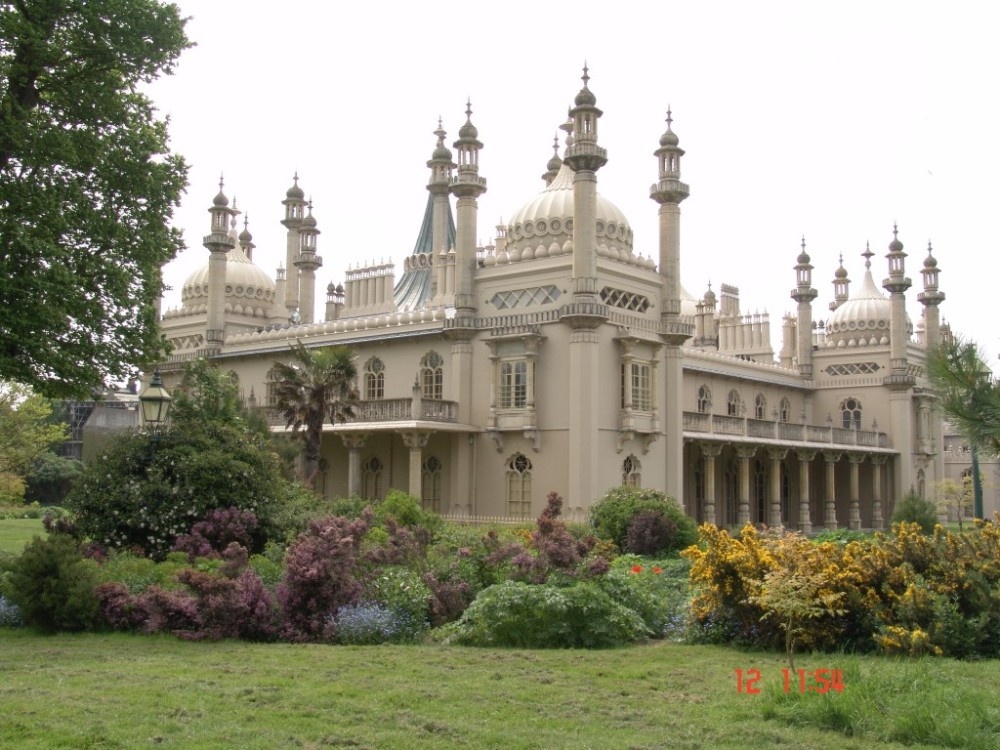
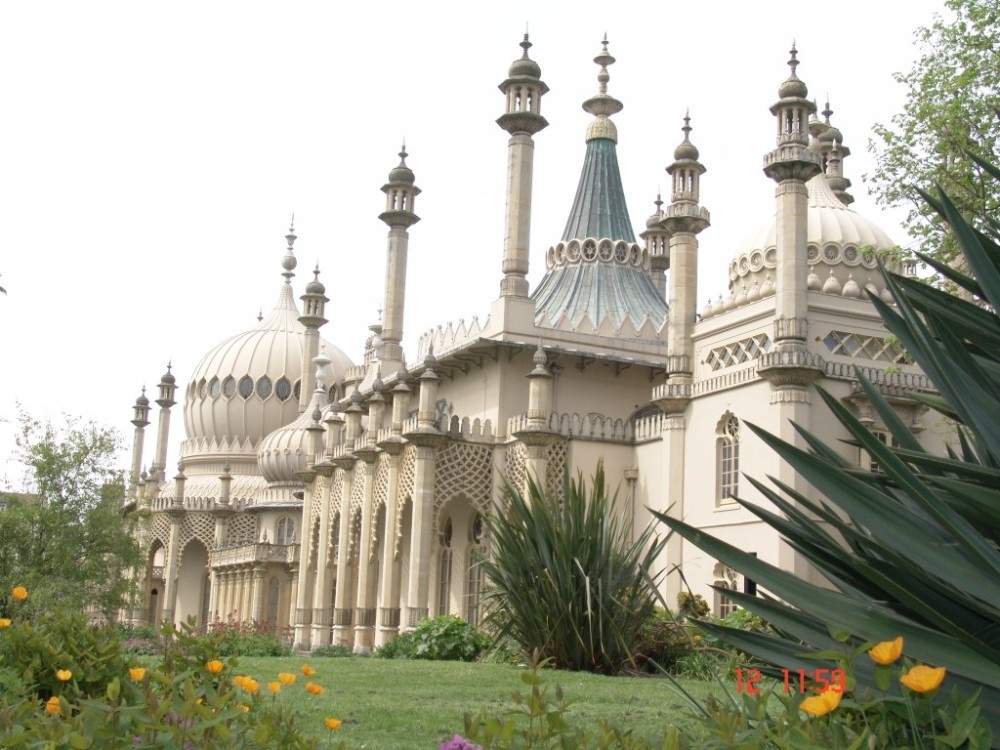
The fantasy skyline of Brighton's Royal Pavilion with its confection of domes and minarets, amazes and intrigues all who first see it.
The Royal Pavilion started as a modest farmhouse leased by George, Prince of Wales, son of George III when he started to visit Brighton to take the sea water as a cure for his swollen neck glands. He fell in love with the place and the rest as they say - is history, with the farmhouse being transformed into the dazzling structure we see today.
Henry Holland made the first alterations, and much of his structure is contained in the present building but his Neo-Classical building lacked any trace of the later flamboyant oriental influences. These came when a costly redecoration of the interior took place between 1801 and 1803. The palace was decorated throughout in the Chinese style which had become popular in Europe during the 18th century. From then on others were engaged to enhance the building, a huge stable block in the grounds was constructed in Indian style by William Purdon, a pupil of Samuel Pepys Cockerell. Later plans were laid for Humphrey Repton who had laid out the gardens at Sezincote, to convert the Pavilion itself into a Mogul Palace. But for whatever reason, the Prince decided against Repton's design, thus the fantasy we see today is a unique blend of unrestricted ideas borne of a partnership between architect John Nash and the Prince. The Royal Pavilion was finally completed in 1822, by which time it had become a glorious eastern style palace of unashamed extravagance.
The Royal Pavilion is lavish in the extreme and totally unlike any other building in the land. Queen Victoria when she visited soon after her accession in 1837 is said to have found it "quite strange, odd, Chinese looking, both inside and out" doubtless she may have found it daunting and probably took an instant dislike remembering that this was the place where the prince had held lavish entertainments and intimate dinners with a succession of mistresses, but which had never been visited by his wife - a fact that would hardly have escaped Her Majesty!
Visitors to the Palace enter through the original onion-domed porch, from here you move into the octagon hall which has a vestibule beyond leading to a 162 foot corridor which connects all the main rooms and the Prince's apartments. It is the daring use of colour in every room that never ceases to amaze and the superb adornment, gilded dragons, carved palm trees and cast-iron staircases with simulated bamboo to match some of the furniture is somewhat overwhelming. Chinese figures, lanterns, delicate trellis work, mirrors, paintings, tapestries, rich silk and velvet hangings all contribute to the wealth of decoration. But for many the most spectacular vision is the famous crystal gasolier at the centre of the Banqueting Hall, decorated with lotus leaves of tinted glass and dragons and jewels, the gasolier, suspended from an enormous winged dragon in the dome must have dazzled the Prince's 18th century guests.
Rooms to see include The Music Room, The Banqueting Room, The Long Gallery, The Royal Bed Chambers, and The Great Kitchen with its ceiling supported by four cast iron columns.
In keeping with the times Brighton's Royal Pavilion can be hired out as a venue for corporate events, private entertaining and for some lucky bride's it makes the most magical setting for marriage ceremonies and wedding receptions.
At any one time visitors are able to see many items on loan from the Royal collection of HM Queen Elizabeth II.
Visitors may choose to tour individually or join a guided tour. There is a Royal Pavilion Shop for the purchase of souvenirs, exclusive gifts and a wide choice of books, jewellery, china, stationery and greeting cards.
The Royal Pavilion has been used many times as a location for films and television. Most recently it has provided exotic backgrounds for Richard III and The End of the Affair which starred Ralph Fiennes and Julianne Moore.
Set to amaze and enthral, Brighton's Royal Pavilion offers everyone an unforgettable day out - it is a "Must See" for anyone visiting this part of England's south coast.


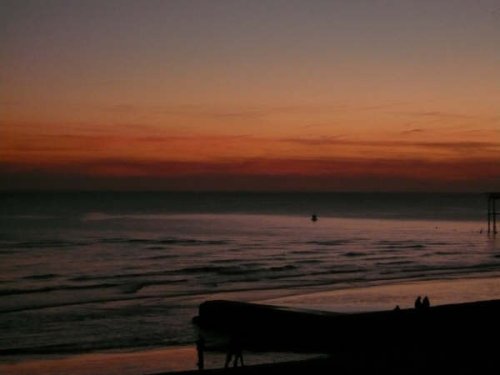
a Seaside Town in the county of East Sussex
(0.2 miles, 0.4 km)Once a fishing village, Brighton was firmly put on the map in the 18th century by the young Prince of Wales, later to become George IV...
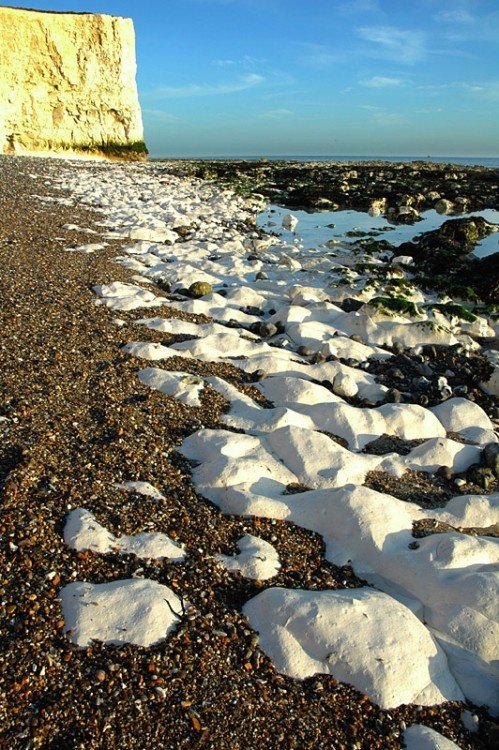
in the county of East Sussex
(5.8 miles, 9.3 km, direction E)The tranquillity of this attractive little village is owed to its seclusion. Telscombe rests in a fold of beautiful Sussex countryside, and the fact that it is difficult to reach from the coast, adds to its charms...
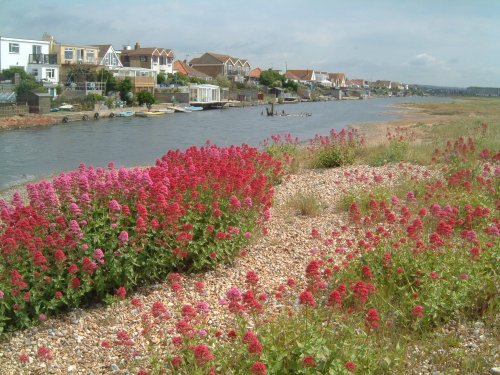
a Seaside Town in the county of West Sussex
(6.1 miles, 9.8 km, direction W)Now an increasingly popular and interesting resort...
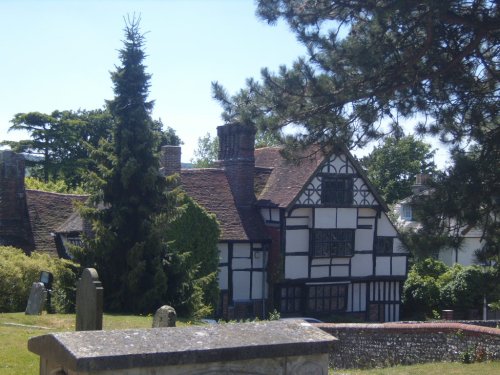
a Picturesque Village in the county of East Sussex
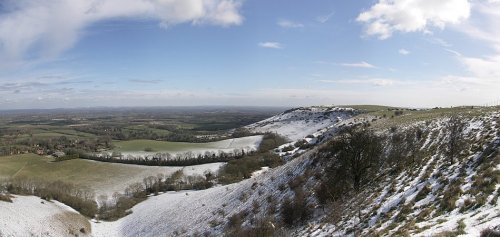
(6.7 miles, 10.8 km, direction N)A pretty village situated in the South Downs..
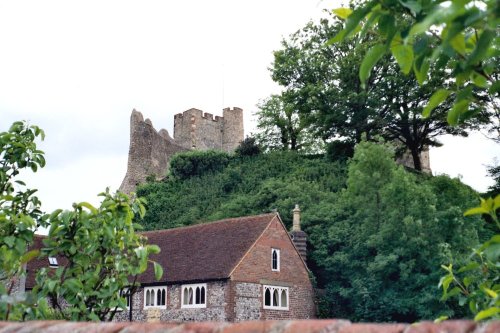
a Historic Market Town in the county of East Sussex
(7.4 miles, 11.9 km, direction NE)Lewes is the boyhood home of the famous diarist, John Evelyn (1620 - 1706) He lived at Southover Grange, an Elizabethan house, which is close to the castle...
All towns in East Sussex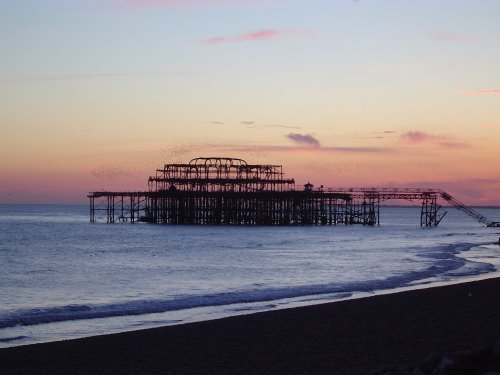
Brighton Pier is famous for its thrilling rides. Take a journey on the 'Wild River' flume and climb the water mountain for a.....
..
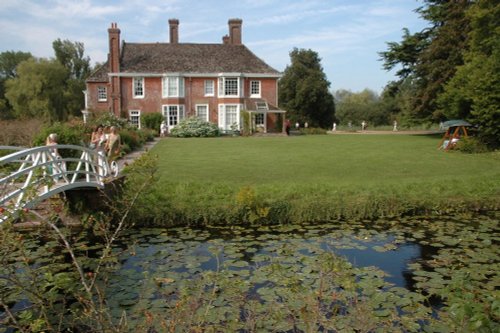
Newtimber Place is a Sussex moated house, build of flint and brick with a roof of Horsham stone. The original house was probably.....
..
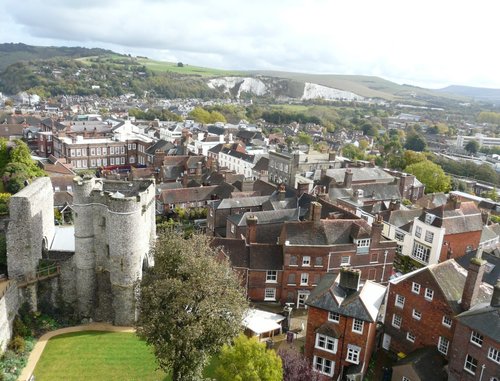
Lewes is dominated by its famous castle built by William de Warenne, trusty confidant and follower of William the Conqueror. It.....
Follow PicturesOfEngland.com on social media and help share the beauty of England....