As an avid bird watcher, it's always nice to see the birds feeding and nesting in the garden. It's one of lifes' simple pleasures that the vast majority can enjoy, whether your garden is big, small or somewhere inbetween. We can all encourage the birds into our gardens by supplying food, water, shelter and a safe environment and the rewards we get for doing this is worth more than any currency.
Some birds can be seen in the garden all year around, such as house sparrows, starlings, blackbirds, song thrushes, wrens, robins and dunnocks.
Look out for bluetits, chaffinches, greenfinches, coal tits, collared doves, jackdaws and woodpigeons as well.
Rarer visitors are goldfinches, siskin, long-tailed tits and both the green and the greater spotted woodpeckers.
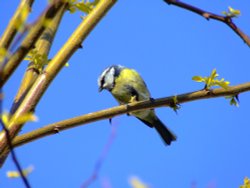
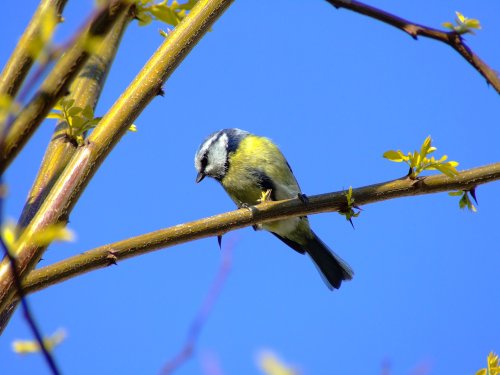
Bluetit...parus caeruleus
Try not to feed the birds with bread, this just fills them up but has no real value to them in terms of energy. A good variety of foods will encourage more species to the garden, ie. Sunflower seeds for greenfinches, nyger seeds for goldfinches, general wild bird seed for house and tree sparrows, blackbirds, robins and starlings.
Peanuts will attract bluetits, great tits, coal tits and occasionally long tailed tits and if you live in the right area you might well have a woodpecker visit.
Through the breeding season, small, soft foods should be offered for parents feeding fledglings and chicks, seeds and insects are a great source of food for them...most of these are found naturally.
Always ensure the feeders are regularly cleaned, also birdbaths are refreshed with clean water on a regular basis. Don't overfill the feeders or bird tables, any spillage left after nightfall will encourage rats into the garden.
Blackbirds and finches enjoy fruit, so any left over grapes, berries or apples are usually devoured quickly. Grated cheese is the perfect food for birds when the cold weather approaches, as are suet balls, which are easily made at home or relatively cheap in the shops.
Planting is important in the garden, fruit trees are a firm favourite, as is forsythia, alder and honeysuckle. Shrubs and hedges provide wonderful shelter, I find my Hebes are always full of house sparrows, dunnocks, and members of the titmouse family. My resident robin has its' favourite location, in the 'red robin' shrub, believe it or not!
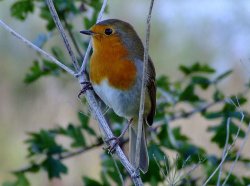
Robin....erithacus rubecula
WINTER
This is a great time of year to see birds, partly because of the lack of leaf cover in most trees, but also because it's possible to see new varieties in the garden. Flocks of finches are commonplace, look out for bramblings, redpolls, siskins, chaffinches, snow buntings and goldfinches.
The usual rule of thumb is bramblings in mixed flocks with chaffinches, redpolls and siskins together, and corn buntings with various other finches. In East Yorkshire, yellowhammers and reed buntings are often seen together in small flocks.
This is a great time to see fieldfares and redwings, sometimes in huge flocks. These large thrushes are beautifully marked and well worth looking out for.
Waxwings visit our shores for winter, but only when the berry crop is particularly poor in Scandinavia. This year, (2008) has seen such an occurrence and the waxwings have been fairly abundant in the east of England. All of the above are possible visitors to the garden, along with the fabulously coloured bullfinch.
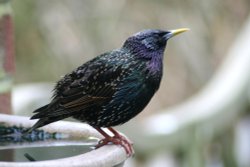
Starling....sturnus vulgaris. (image by Roy Jackson)
SPRING
Keep an eye out in the garden for the smaller British birds, the ever-busy wren with its' gorgeous song, also goldcrests and firecrests which can sometimes be seen in the garden.
The birds will be pairing up now and there is frenzied activity with the males competing for their chosen mates.
The insects will now be in pretty good supply and wagtails will be very active. May sees the arrival of the flycatchers, both spotted and pied, as well as most of our warblers. The chiffchaff is a common garden visitor, as is the aptly named garden warbler. Although it has a lack of distinguishing plumage, its' song is absolutely beautiful.
Of course, swallows, swifts and the house and sand martins will be here for April, a sure sign that summer is on its' way.
Spring is also the time to hear and see the cuckoo, it looks very much like a sparrow hawk and feeds on large caterpillars and other small insects.
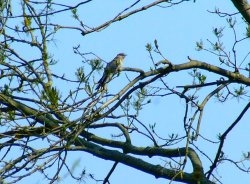
Cuckoo....Cuculus canorus
SUMMER
If, like me, you have privet and/or hawthorn hedges in the garden, it's very likely that you will have blackbirds, song thrushes, hedge sparrows and robins nesting there.
Encourage bluetits with a nesting box in a quiet, sheltered part of the garden...try not to disturb them if you're lucky enough to tempt them to use it.
If you have woodpeckers visiting regularly, it's a better idea not to have encourage the bluetits as the great spotted woodpecker will take the eggs and/or chicks.
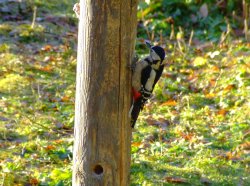
Great spotted woodpecker....dendrocopus major (female)
AUTUMN
The season when berries are still plentiful, so finches and thrushes are still feeding well. The swallows, swifts and martins will now be leaving on their annual migration.
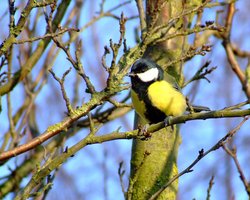
Great tit....parus major

| Article Title | Author | Date |
| Stonehenge | David Coe | 23rd January 2024 |
| Derwent Dam: A Historic Icon in the Heart of Derbyshire | David Coe | 14th January 2024 |
| The Native Trees of England: A Botanical Tapestry | David Coe | 15th December 2023 |
| Stoke-on-Trent: The Potteries Hub | David Coe | 12th December 2023 |
| England's 'Heritage at Risk Register' 2023 | David Coe | 11th December 2023 |
| 10 of the prettiest villages in the Lake District, Cumbria | poe | 16th March 2023 |
| Where to see Daffodil Displays in the South West of England | poe | 3rd March 2023 |
| 10 Famous Landmarks in Dorset | poe | 1st March 2023 |
| List of popular Dorset market towns including market day | poe | 1st March 2023 |
| 10 Best Historic Attractions to visit in York, England | poe | 16th May 2022 |
Follow PicturesOfEngland.com on social media and help share the beauty of England....